
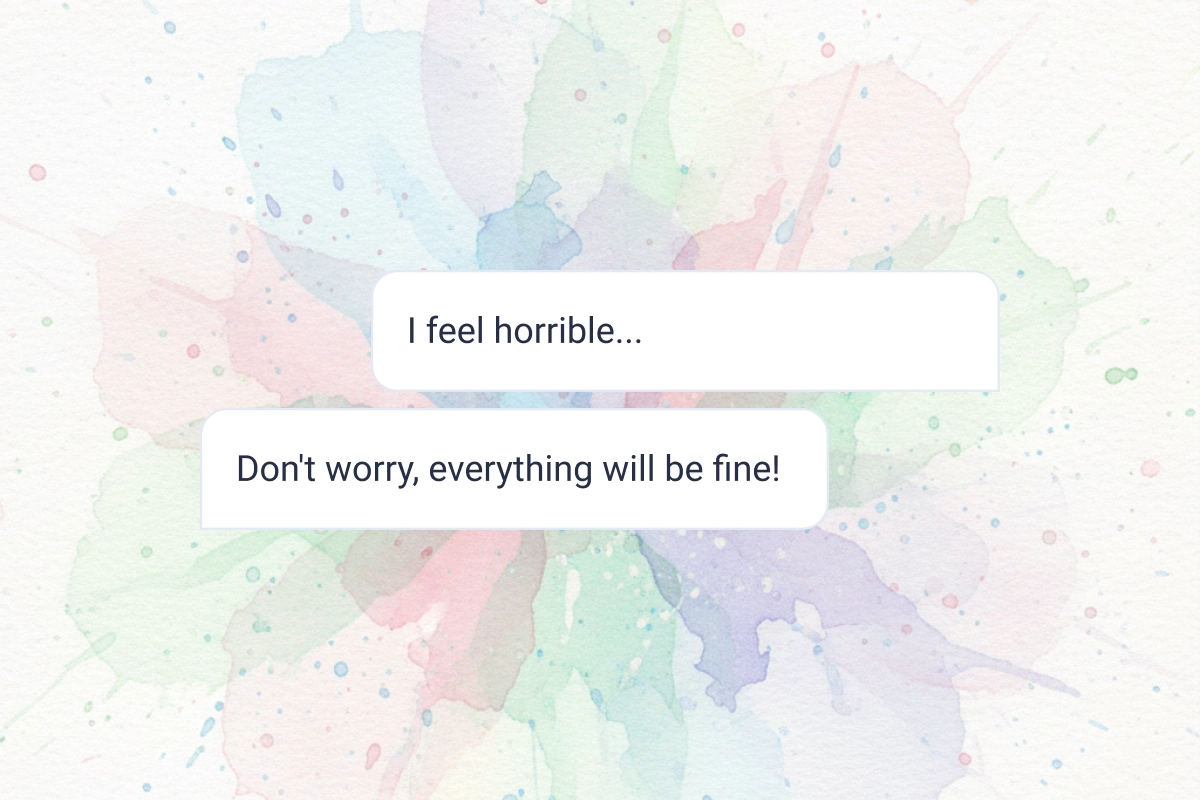
At any given hour, countless people are unspooling their anxieties into the glowing void of a chat window.
Without any formal marketing or medical intent, large language models like ChatGPT have inadvertently become the world’s largest accidental therapists. People facing the crushing weight of insomnia, financial stress, or sudden panic are turning to artificial intelligence to confess thoughts they feel they cannot share with their friends or spouses.
At first glance, seeking emotional comfort from a mathematical algorithm feels like a uniquely dystopian, 21st-century phenomenon. But the underlying mechanics of this interaction — the profound relief of simply translating a chaotic feeling into words — is anything but new. The human brain has always required a canvas for its distress.
The Invention of the “Talking Cure”
Long before anyone typed their fears into an app, the concept of healing through articulation had to be discovered.
In the 1880s, a prominent Austrian physician named Josef Breuer began treating a highly intelligent young woman named Bertha Pappenheim (known in medical literature as “Anna O.”). She was suffering from severe visual disturbances, hallucinations, and partial paralysis — symptoms with no physical cause. Breuer reported that when Bertha described the thoughts, memories, and experiences surrounding particular symptoms, those symptoms sometimes temporarily disappeared.
Bertha herself coined the terms for this process. She called it “chimney sweeping,” or more famously, “the talking cure.”
Breuer’s account of the case became an important early influence on psychoanalytic thinking, although later historians and clinicians have questioned how accurately the famous account represents what happened. When a person is given a safe, observant space to externalize their internal narrative, the pressure drops.
The ELIZA Effect
By the 1950s, psychologist Carl Rogers had developed this idea further, arguing that people can make meaningful psychological changes when provided with an accepting, empathic, nonjudgmental therapeutic relationship.
In 1966, an MIT computer scientist named Joseph Weizenbaum decided to test this theory using early technology. He built a simple text-based program called ELIZA, designed to mimic a Rogerian therapist. If you typed, “I am unhappy,” ELIZA would simply reflect it back: “Do you think coming here will help you not to be unhappy?”
Weizenbaum was shocked by the result. Even though users knew ELIZA was just a few lines of code, they immediately began pouring out intimate, highly personal secrets. This phenomenon — the ELIZA Effect — demonstrated how readily people can attribute understanding and empathy to a computer, even when they know it is a machine. Sometimes, they just desperately need a frictionless space to be heard.
The Neuroscience of Naming It
Why does typing a fear into a chat box actually make your chest stop hurting? Neuroimaging research has found that putting feelings into words — known as affect labeling — can change activity in brain regions involved in emotional processing.
According to functional MRI studies led by researchers at UCLA, translating a complex, overwhelming emotion into explicit language triggers a process called affect labeling. In one UCLA study, affect labeling was associated with reduced amygdala and other limbic activity in response to negative emotional images.
You don’t need a solution to feel relief. The mechanical act of naming the ghost makes it less terrifying.
Furthermore, keeping anxious thoughts suppressed requires a massive amount of working memory. By offloading that cognitive loop into an external container — whether it’s a leather journal or an AI companion — you are literally freeing up your brain’s processing power.
The Rules of Synthetic Empathy
We know that a digital sounding board works, and we know that a staggering number of people experiencing psychological distress worldwide do not have access to professional care. AI can act as a crucial, low-barrier bridge.
But as we design these systems, we must draw a hard ethical line between a “functional container” and a “fake human.” An AI system must adhere to strict interaction boundaries to keep the user safe: it should never pretend to be a clinician, a guru, or a best friend. Its ultimate value lies in being exactly what it is — a blank, tireless slate. It is a modern-day chimney sweep: a completely safe, zero-judgment space where you can leave your heaviest thoughts in the middle of the night, knowing you won’t have to carry them alone in the morning.
This isn’t a replacement for therapy or crisis support. If you’re in distress, please reach out to a mental health professional or local emergency services.
Find your center with Calmisu.
Guided breathing, grounding, calligraphy, and meditation — free to download.